
The factory game where every machine is real.
Build production lines from wood fire to the atom. Balance the ratios, power the grid, defend what you build. Realistic down to the water in the boiler, and never a chore. On PC and mobile.
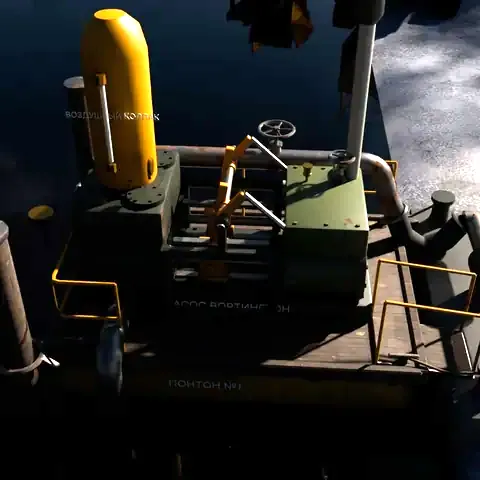
Balanced. Not a bottleneck in sight: every machine is at full load. The line is just too small, so scale all of it up. Add and remove machines until the readout meets the plan.
Every machine works like the real one.
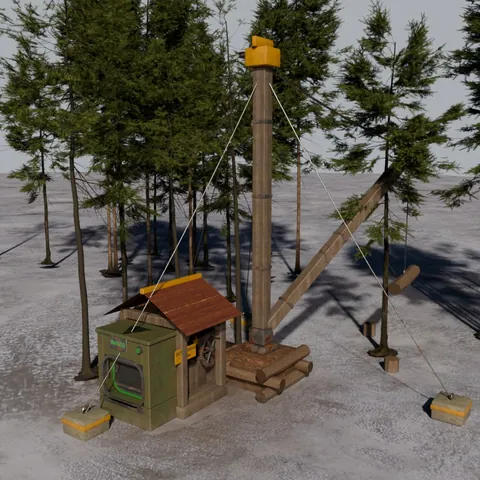
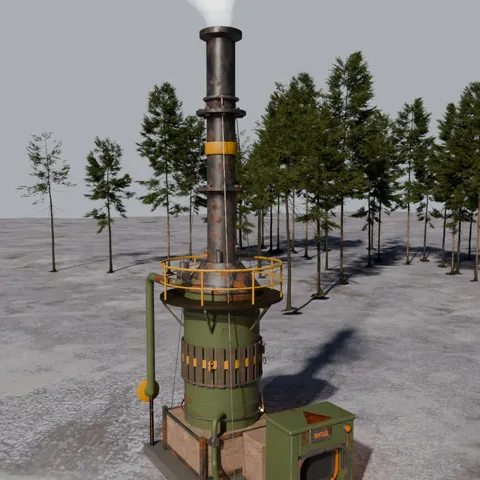
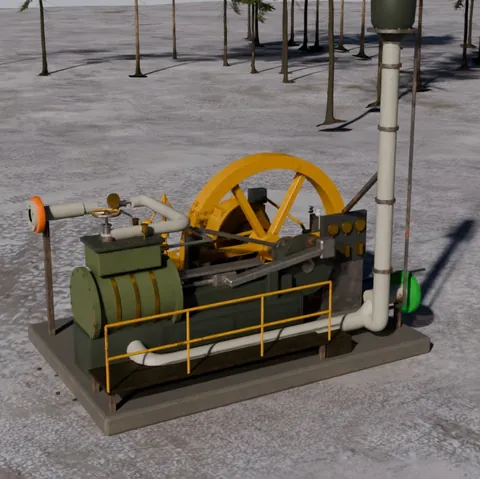
A boiler needs water, and a pump to lift it. A logging yard is a crane on a hand winch. Each machine shows its real mechanism, takes a belt in and sends one out, and stands idle until it is fed. These are the machines of the first age, rendered from the game.
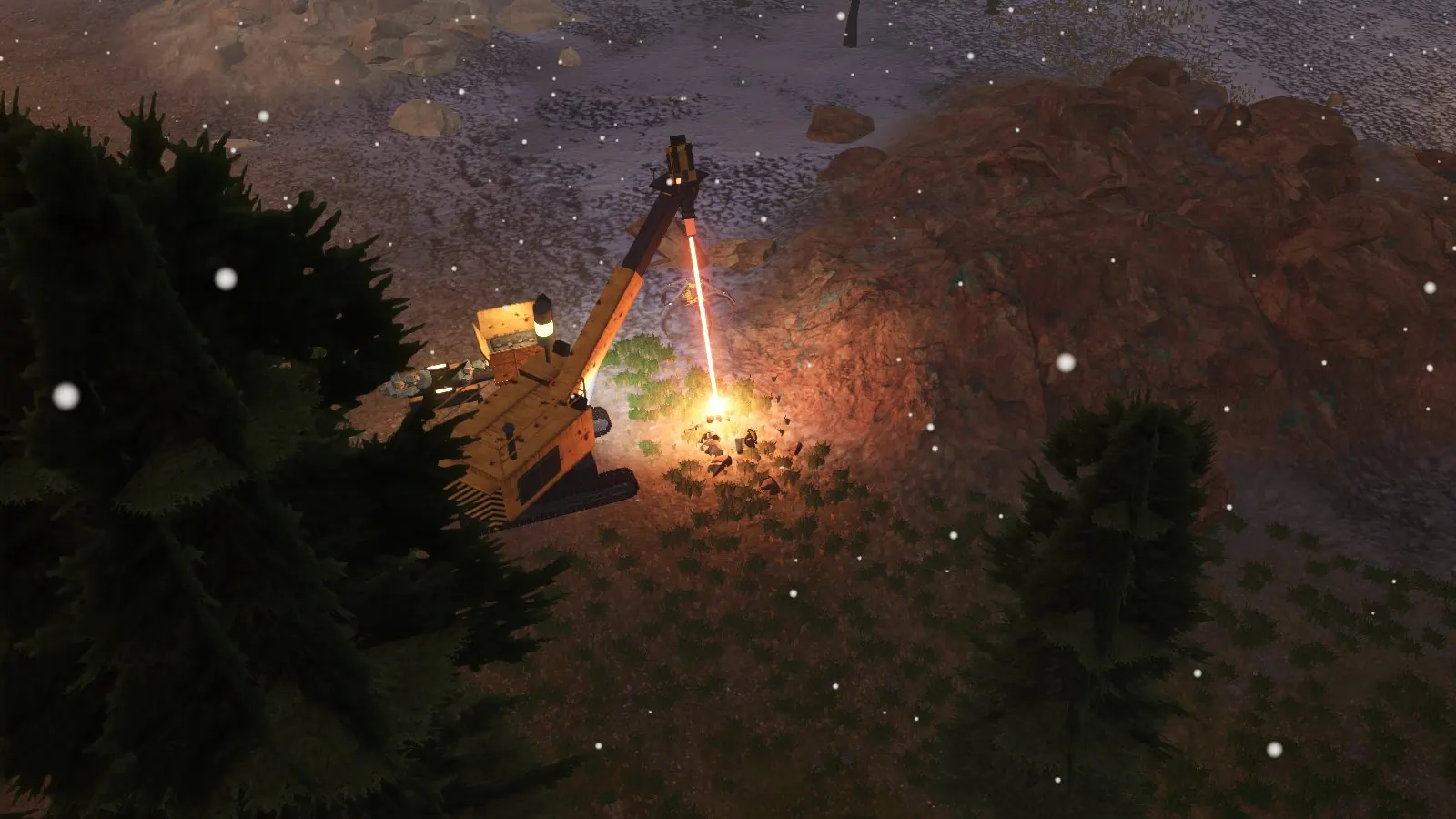
Laser excavator ЭКСКАВАТОР
A tracked excavator with a mining laser on its telescopic boom and a clamshell grab below it. The laser breaks the hill into rubble; the grab sets the pace, loading the belt bite by bite. The hill wears down as you mine it.
- Mk1
- 60 ore / min, a full yellow belt
- Mk2 to Mk4
- 120, 180, 240 ore / min
- Power
- 5 MW (Mk1)
From fire to the atom, in six ages.
Each age brings its own machines and goods, from charcoal and steam to steel, oil, radar and the atom. Pull the lever through them.
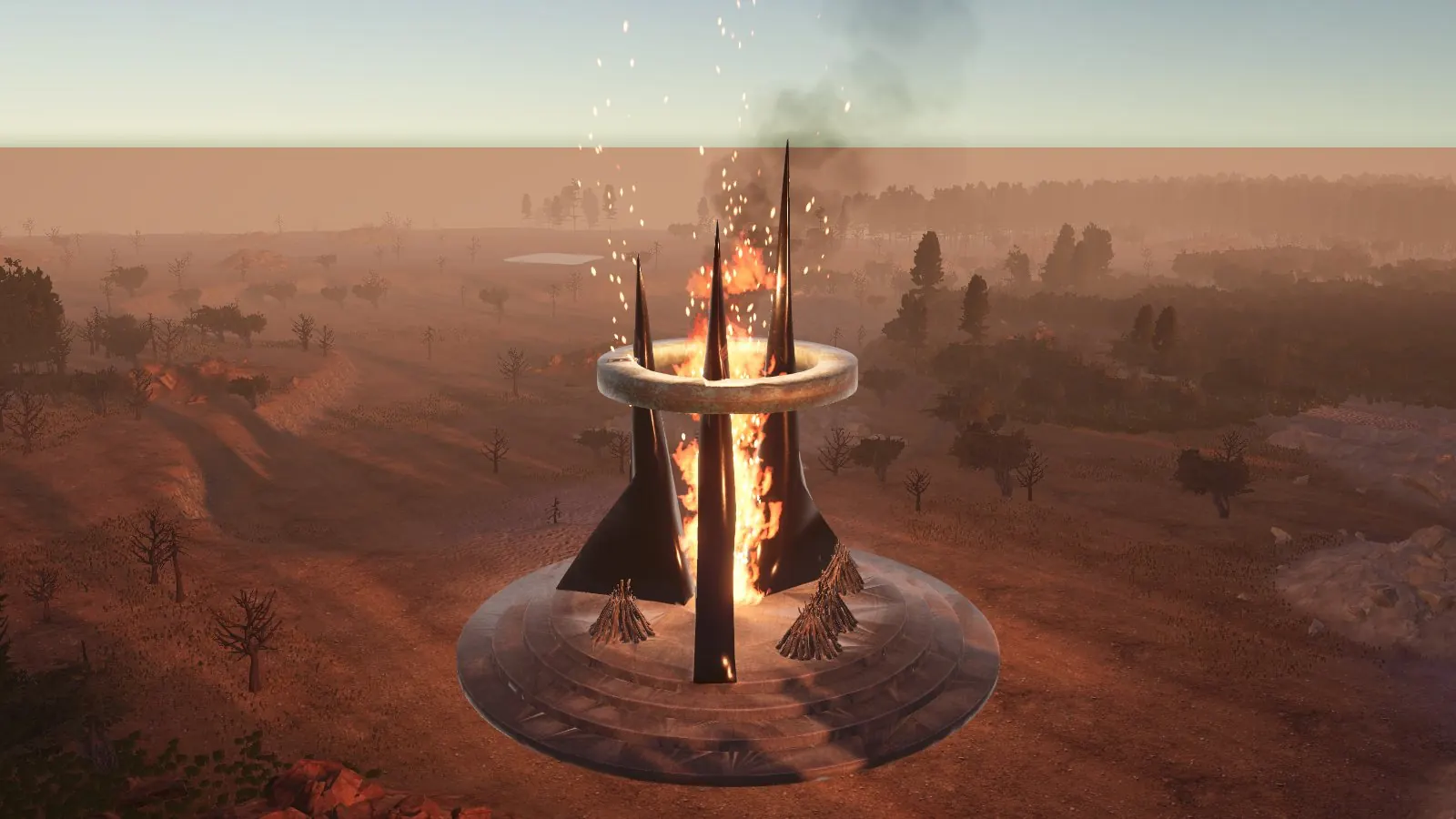
Wood and Fire
Logs, charcoal and the first steam. Restore the abandoned camp's old boiler, steam engine and excavator, then smelt copper with charcoal. The age ends with the Signal Fire.
Goods: Logs · Timber · Charcoal · Pitch · Steam · Copper ingot · Ballista bolt
Coming from Factorio or Satisfactory?
You know the loop: mine, smelt, belt, balance, scale. Here is what ZAVOD does differently. The full comparison
Real machines, real numbers
Every rate comes from how the real machine works. A boiler drinks water, charcoal is burned slowly under earth, and a condenser gets a quarter more power out of the same steam.
Wear you can see, never a chore
Machines weather and rust with the days they have stood, but wear never breaks them. Realism is the texture, not a tax on your time.
History is the tech tree
Six ages from wood fire to the atom. Soviet machinery first, then Soviet and Chinese technology in the later ages. Each age ends with a monument your factory has to supply.
The factory arms itself
Your lines make the bolts, shot and shells, and belts carry them to the towers and guns that hold the enemy off.
Build from above, then walk it
Plan from the top-down view, then walk your own works on foot as Yuri, through the smoke and the lamp light.
A world from a seed
Generated maps with ore hills you mine down, biomes from tundra to desert, and day, night and weather.
Report for the first shift.
Join the mailing list for devlog despatches and the first playtest invites. One email when there is something worth seeing, and nothing else.
PC and mobileNo release date yetMade by one developer
Questions from the works floor.
What is ZAVOD: Fire to Atom?
A factory automation game. You build production lines, from logging yards and charcoal pits to refineries and reactors, then balance them, power them and defend them across six ages of industry.
Is it like Factorio or Satisfactory?
It belongs to the same family: mining, belts, ratios and scaling up. ZAVOD leans on real industry. Machines work the way their real counterparts did, and history is the tech tree.
When does it come out, and what will it cost?
There is no release date or price yet; the game is in development. The mailing list hears first.
Which platforms?
PC and mobile.
Is there multiplayer?
The game is being built single-player first, against AI enemies. Opt-in raids between players' bases are planned for later.
How realistic is it?
Realistic in how things work, not in how much they nag. Rates, inputs and machines follow the real ones; wear is something you see, never a breakdown you have to fix.
Who is making it?
One developer, in Unity 6.